
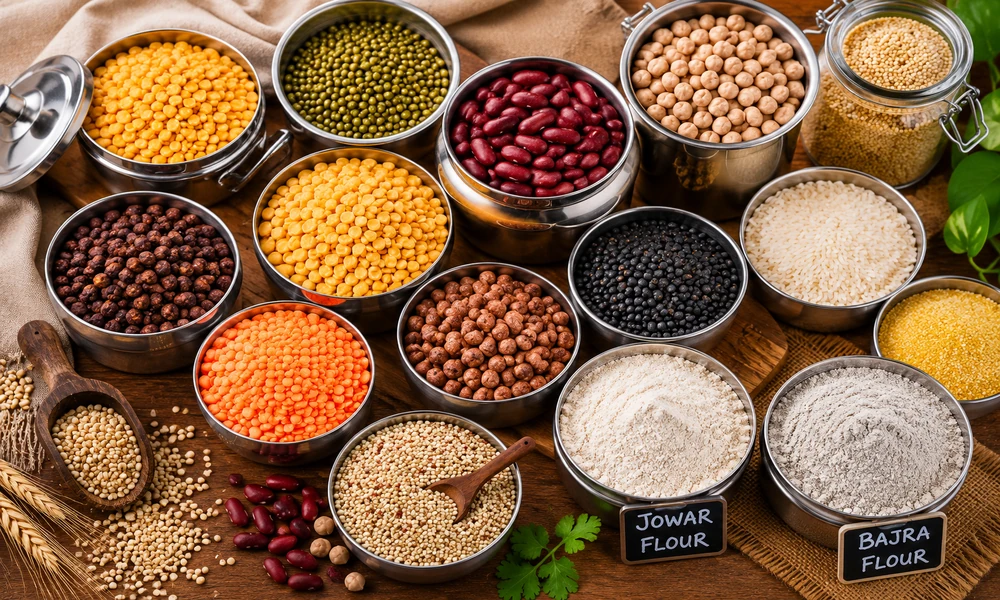
You do not need exotic superfoods or imported supplements to hit your fibre goals. Most high-fibre Indian foods are already sitting in your kitchen, in the dal, the sabzi, and the morning poha. Fibre supports digestion, keeps you full for longer, feeds the good bacteria in your gut, and helps steady blood sugar, yet most Indians fall short of the recommended daily intake.
As Delhi-based dietician in Delhi, Avni Kaul often points out, the fix is rarely about adding new things and more about using everyday staples better.
Before the food list, it helps to understand why fibre matters and what kind you are actually eating.
Two Types of Fibre, and Why You Need Both
Fibre comes in two broad forms, and Indian diets can supply both easily.
Soluble fibre dissolves in water and forms a gel in the gut. It slows digestion, helps control blood sugar spikes, and supports healthy cholesterol levels. You find it in oats, legumes, apples, guava, and flax seeds. Insoluble fibre does not dissolve. It adds bulk to stool and keeps things moving, which helps prevent constipation. It is found in whole wheat, bran, vegetable skins, and millets.
Most whole foods contain a mix of both, which is why eating a variety of staples matters more than chasing a single “best” fibre food. The recommended intake for most adults sits around 25 to 30 grams a day, and surveys consistently show many Indians eat well below this, largely because of the shift toward refined flours and polished rice.
Legumes and Pulses
Dals and beans are among the richest fibre sources in an Indian diet. Rajma, chana, moong, masoor, and lobia all deliver fibre along with plant protein, which makes them doubly useful, especially in a vegetarian diet where protein quality is a common concern.
A few practical points make a real difference here. Whole versions like whole moong or kala chana carry more fibre than the polished, split dals, because splitting and polishing removes the fibre-rich outer layer. Soaking pulses before cooking improves digestibility and reduces the gas that puts some people off them. And pairing a legume with a whole grain, like rajma with brown rice or chana with bajra roti, gives you a fuller fibre and protein profile in a single meal.
Whole Grains and Millets
Refining strips grains of much of their fibre, so the simplest upgrade is choosing whole over polished. Whole wheat atta, brown rice, oats, and millets like jowar, bajra, and ragi carry far more fibre than maida, white rice, or refined breakfast cereals.
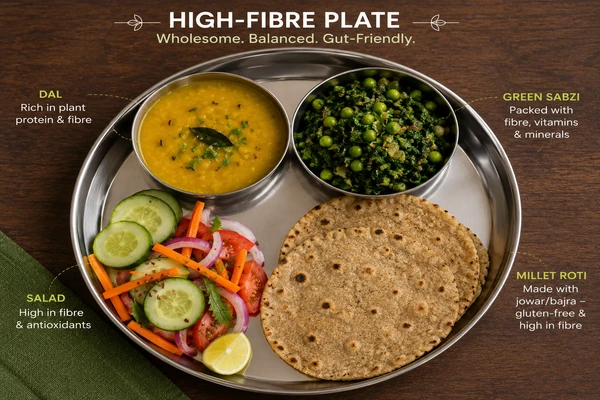
Millets deserve a special mention. They are naturally high in fibre, gluten free, and have a lower impact on blood sugar than refined grains, which is why they have made such a strong comeback. You do not need to overhaul your meals to use them. Rotating a bajra or jowar roti through the week, or starting the day with a ragi porridge, lifts your intake without changing how you eat. Even small swaps, like moving from white bread to whole grain or from polished to hand-pounded rice, add up over time.
Vegetables With the Skin On
Everyday vegetables quietly add up across the day. Bhindi, beans, carrots, peas, cabbage, and leafy greens like palak and methi are all solid fibre sources, and they bring vitamins and minerals along with the fibre.
The way you prepare them matters. A good share of fibre sits in or just under the skin, so leaving the skin on edible vegetables like lauki, potato, cucumber, and carrot keeps more of it intact. Lightly cooking vegetables rather than overboiling them also preserves more of their structure and nutrients. Raw salads, sprouts, and a side of kachumber are easy ways to add fibre that needs almost no cooking at all.
Fruits You Already Buy
Guava, apple, pear, orange, banana, and pomegranate are common, affordable, and fibre rich. Guava in particular is one of the highest-fibre fruits widely available in India, especially when eaten with the seeds.
The single most useful habit with fruit is to eat it whole rather than as juice. Juicing removes most of the fibre and concentrates the sugar, so a glass of juice gives you a quick sugar hit with little of the fullness or digestive benefit that the whole fruit provides. Eating the fruit with its skin where edible, as with apple, pear, and guava, adds even more.
Nuts, Seeds, and Everyday Add-Ons
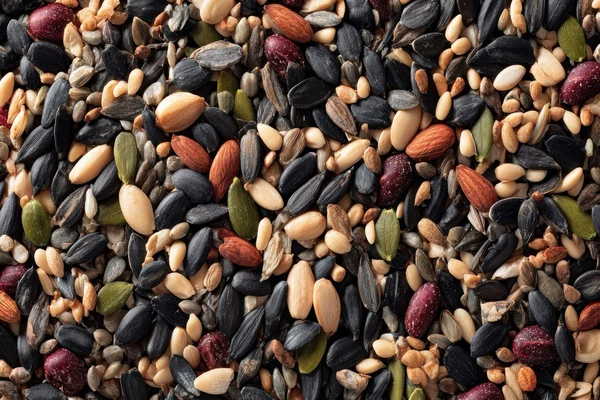
Small additions throughout the day stack up. A spoon of flax or chia stirred into dahi, a handful of peanuts or almonds, roasted chana as a snack, or a sprinkle of sesame on a sabzi all push your fibre higher without much effort or planning.
Seeds are an easy win because they slot into food you already eat. Flax and chia in particular are rich in soluble fibre and blend into curd, smoothies, or porridge without changing the taste much. Just add water alongside them, since these seeds absorb a lot of liquid.
A Simple Way to Eat More Fibre Every Day
You do not need a new diet, just a few consistent swaps. Choose whole grains over refined ones, keep skins on where edible, eat fruit whole instead of juiced, and build at least one dal or legume into your day. A balanced plate that includes a whole grain, a legume or vegetable, and some fruit across the day usually gets most people close to their fibre target without any tracking.
Two cautions are worth remembering. Increase fibre gradually rather than all at once, since a sudden jump can cause bloating and discomfort while your gut adjusts. And drink enough water through the day, because fibre works best when there is adequate fluid to move it along.
About Avni Kaul
Avni Kaul is a renowned registered dietician and nutritionist, and the founder of Nutri Activania, a Delhi-based nutrition consultancy. A Gold Medallist from the University of Delhi, she brings a strong academic foundation to her evidence-based approach to nutrition and wellness.
Her expertise has earned recognition at the highest levels. She served as an Olympic Nutrition Advisor at the 2018 Youth Games in Buenos Aires, and was honoured with the Best Dietician Award at the Fitness Excellence Awards in 2019. Through Nutri Activania, Avni works with clients on sustainable, personalised nutrition for weight management, clinical conditions, gut health, and overall wellbeing, helping people build healthier habits around everyday Indian food rather than restrictive fad diets.

Comments are closed.