Category

Dental

Category

You catch your reflection in a photo, a video call, or the bathroom mirror, and your eyes go straight to your teeth. Maybe it is discoloration, worn edges, crowding, or gums that look uneven. You want a better smile, but you do not want to trade health for looks. That tension is real, and it is why the best smile improvements come from a dentist in Honolulu who sees function and appearance as part of the same picture.

A stronger smile is not built on whitening alone, and it is not built on cosmetic work that ignores gum health, bite balance, or enamel strength. The safest path usually starts with the basics, then moves into treatments that fit your goals, your budget, and your mouth as it actually is. These smile enhancement tips can help you think like a dentist who cares about both beauty and long term oral health.

Healthy gums and clean enamel create the base for cosmetic dentistry

If your gums bleed when you brush, if your breath stays off even after mouthwash, or if plaque keeps building up around the same spots, cosmetic treatment should not be the first move. Gum disease can change the way your smile looks and feels. It can also affect how long cosmetic results last. The CDC explains that gum or periodontal disease can damage the tissues that support your teeth, which makes early care worth taking seriously.

This is where many people get frustrated. You may want veneers or whitening now, but inflamed gums, untreated decay, and heavy tartar make those choices less predictable. A general and cosmetic dentist will usually start with a full exam, a cleaning, and any needed restorative care. That is not a delay. It is how you protect your investment and avoid chasing cosmetic fixes that sit on top of untreated problems.

Whitening works best when stains are identified before treatment

Not all discoloration responds the same way. Coffee, tea, red wine, and tobacco often cause surface staining, while some darkening comes from age, medication, trauma, or old dental work. That matters, because over the counter strips may help one person and disappoint another.

Professional whitening can brighten natural teeth more evenly, especially when the enamel is healthy and the shade change is realistic. If one tooth is darker because of past injury, or if visible fillings do not change color with whitening, a dentist may suggest bonding or a crown instead. This is one of the most useful cosmetic dental tips to remember. The right treatment depends on why the color changed in the first place.

Small shape changes can improve a smile without major dental work

People often assume smile design means dramatic treatment. Sometimes the biggest difference comes from small corrections. Smoothing a chipped edge, reshaping a slightly uneven tooth, or using bonding to close a minor gap can change the whole feel of your smile without removing much enamel or committing to a larger plan.

This matters if you have been putting off care because you fear a long, expensive process. A dentist focused on both health and aesthetics will often look for conservative options first. If your bite is stable and your teeth are sound, subtle contouring or composite bonding may give you the cleaner, softer look you wanted without pushing you toward treatment you do not need.

Daily habits protect both appearance and long term oral health

Cosmetic results fade faster when home care slips. Whitening loses ground. Bonding stains. Gums get puffy. Breath changes. The CDC offers practical oral health tips for adults that support both appearance and prevention, including brushing twice a day with fluoride toothpaste and cleaning between teeth daily.

You do not need a perfect routine. You need one you can keep. If you clench your teeth, wear a night guard if your dentist recommends one. If you sip coffee for hours, rinse with water after. If your gums are tender, switch to a soft brush and improve your technique instead of brushing harder. Cosmetic dentistry looks better when the everyday habits behind it are steady.

Professional care and DIY fixes do not carry the same risks

Approach What It Can Help Main Limits Best Use
Whitening toothpaste Light surface stain Minimal shade change, can be abrasive if overused Maintenance after professional cleaning or whitening
Over the counter whitening strips Mild to moderate yellowing on natural teeth Uneven results, tooth sensitivity, no change to crowns or fillings Healthy teeth with simple staining
Professional whitening More noticeable brightening Temporary sensitivity, still limited by existing restorations Faster, more controlled whitening
Dental bonding Chips, small gaps, shape issues, isolated discoloration Can stain or wear over time Conservative cosmetic improvement
Veneers Color, shape, size, spacing concerns Higher cost, usually irreversible enamel changes Broader smile redesign

The point is not that home products are bad. Some are useful. The problem starts when a DIY fix is asked to solve something it cannot solve, like internal discoloration, bite wear, or gum recession. That is often when money gets wasted and disappointment builds.

Three steps can make smile improvement feel manageable

Start with a health first exam. Ask for a full check of your gums, enamel, bite, and existing dental work before choosing cosmetic treatment. A good plan for smile aesthetics and oral health starts with what needs protection, not just what needs brightening.

Pick one concern, not five. If you focus on the issue that bothers you most, color, shape, or alignment, the path gets clearer. Many people feel less overwhelmed once they realize they do not need to fix everything at once.

Ask for conservative options first. Bonding, contouring, whitening, and gum care may get you close to your goal without major treatment. If you do need more involved cosmetic dentistry, you will move into it with better information and healthier teeth.

Your smile does not need to look fake to look better, and it does not need to be perfect to feel like yours again. The best results usually come from steady care, honest planning, and a dentist who respects both appearance and function. If you are ready to improve your smile, schedule a visit with a general and cosmetic dentist and find out which changes will make the biggest difference for you.

You might not think much about your mouth until something hurts, bleeds, or starts to change the way you eat, speak, or smile. That is often how it goes. Life gets busy, a cleaning gets pushed back, and brushing and flossing can start to feel like one more thing on a long list. Then, all at once, a small issue becomes harder to ignore. If that sounds familiar, you are not alone, and you are not failing. Oral health is closely tied to the rest of your body, which means regular dental care from a Fairfield dentist can help protect more than your teeth. In simple terms, The Role Of General Dentistry In Supporting Overall Health is about prevention, early treatment, and keeping small problems from turning into larger ones.

When your mouth is healthy, daily life feels easier. You chew without pain, speak with ease, and smile without thinking twice. When it is not, the effects can reach further than many people expect. Gum inflammation, untreated decay, and oral infections can affect comfort, sleep, nutrition, and even confidence. Because of that, routine visits for general, cosmetic, and restorative dentistry are not just about appearance. They are part of taking care of your whole self.

Why does general dentistry matter beyond your teeth?

It is easy to see dental visits as separate from the rest of your health care. But your mouth is part of your body, not apart from it. According to the CDC’s overview of oral health, oral health affects eating, speaking, smiling, and overall well being. Problems in the mouth can also be linked with conditions such as diabetes and heart disease, and they can make day to day life harder in ways that build slowly over time.

So, where does that leave you? It means a routine exam and cleaning can do more than polish teeth. General dentistry helps spot cavities early, check for gum disease, monitor changes in soft tissues, and catch signs of grinding, bite issues, or wear before they lead to pain or costly treatment. That is the quiet value of prevention. You may not feel a cavity when it starts, and early gum disease can show up as mild bleeding that is easy to dismiss. Left alone, though, those issues can grow.

Oral health and overall wellness are more connected than many people realize. If your gums are inflamed, chewing may become uncomfortable, which can affect the foods you choose. If a broken tooth makes you avoid smiling or speaking, your confidence may take a hit. If an infection develops, it can disrupt sleep, focus, and work. These are not small effects. They shape how you move through your day.

What can happen when routine dental care gets delayed?

Sometimes the delay is practical. Cost is a concern. Schedules are packed. Dental anxiety is real. Other times, it is emotional. You may worry about being judged for how long it has been, or fear that one visit will lead to a long list of treatments. Those feelings make sense, and they keep many people away longer than they want.

The hard part is that delay often makes care more complex. A small cavity may need a simple filling at first, but if decay spreads, treatment can move toward a crown or root canal. Mild gingivitis may improve with professional cleaning and better home care, but untreated gum disease can lead to deeper infection, bone loss, and loose teeth. What starts as manageable can become expensive, painful, and stressful.

What if you have no pain right now? That can be misleading. Many dental problems begin quietly. General dental services are built around finding those problems early, when treatment is usually simpler and recovery is easier. This is one reason regular checkups matter so much. They create a pattern of care instead of a cycle of crisis.

How do general, cosmetic, and restorative dentistry support daily health?

Each type of care plays a different role, yet they often work together. General dentistry focuses on prevention and early treatment, including exams, cleanings, fillings, and gum care. Cosmetic treatment may improve appearance, but it can also support confidence and help people feel more comfortable showing up in work and social settings. Restorative dentistry repairs damage, replacing missing or broken tooth structure so you can chew, speak, and function more normally again.

That is why general dentistry is often the foundation. It helps maintain stability. Then, if you need added support, cosmetic or restorative options can build on that base. A patient with worn teeth from grinding may need a night guard, fillings, or crowns. Someone who has avoided care for years may first need a deep cleaning and decay treatment before considering whitening or other cosmetic changes. Health comes first, and appearance often follows naturally from that care.

What practical choices help protect your health most?

It can help to compare home care with professional care, not as an either or choice, but as a partnership. Brushing and flossing matter every day, while dental visits provide the deeper check that you cannot do on your own. The National Institute of Dental and Craniofacial Research oral hygiene guide outlines habits like brushing twice a day with fluoride toothpaste and cleaning between teeth daily. Those steps are strong protection, but they work best when paired with regular exams.

ApproachWhat It Helps WithLimits to Know
Daily home careRemoves plaque, freshens breath, lowers cavity and gum riskCannot diagnose hidden decay, gum pockets, or bite problems
Routine dental exams and cleaningsFinds early issues, removes tartar, checks gums and soft tissuesWorks best when visits are consistent, not only pain based
Restorative treatmentRepairs damage, restores chewing and comfort, prevents further breakdownMay become more extensive if problems have been ignored too long

That comparison often brings relief. You do not have to do everything perfectly. You just need a realistic plan that covers both what you can do at home and what should be checked by a professional.

What can you do right now to support better health?

1. Pay attention to early signs. Bleeding gums, bad breath that lingers, tooth sensitivity, jaw soreness, or a tooth that feels rough or cracked are worth noting. None of these guarantee a major issue, but they do signal that your mouth needs attention.

2. Tighten up your daily routine. Brush twice a day with fluoride toothpaste, clean between your teeth once a day, and drink water often. If you snack frequently on sugary foods or drinks, try to reduce how often your teeth are exposed. Small changes done every day can lower risk in a meaningful way.

3. Schedule preventive care before pain forces the issue. If it has been a while, that is okay. The important step is simply to restart. Preventive visits are often the easiest point of entry, and they can give you a clear picture of what is going on without guessing.

Your mouth does not exist in isolation, and neither does your health. The better you care for your teeth and gums, the more support you give your comfort, nutrition, confidence, and long term wellness. If you have been putting off care, you do not need to solve everything at once. Start with one appointment, one honest conversation, and one practical step forward. General, cosmetic, and restorative dentistry can help you protect your smile and support your overall health in a way that feels steady and manageable.

Patients with a large tooth loss who desire a long-term solution may benefit from full-arch dental implants. The overall price of treatment will vary from person-to-person, however. A variety of factors will affect the final price, such as the number of implants, the materials used, preparatory procedures, the expertise of the dentist and the costs of the lab. Knowing these things can help the patient to plan financially and make decisions.

When comparing full-arch implant options, patients may also consider affordability alongside treatment quality, materials, and the experience of the dental team. Searching for the cheapest place to get all-on-4 dental implants can help identify more budget-friendly options, but the lowest quoted price should not be the only consideration. Patients should check what is included in the treatment package, such as consultations, imaging, implant placement, temporary and permanent restorations, follow-up visits, and any necessary preparatory procedures, to understand the true overall cost.

Number of Implants Required

One of the biggest factors regarding the cost of implants is how many are required. The number of implants may be four, five, six or more for some implant full arches, depending on the patient’s jawbone condition and treatment plan. An increased number of implants leads to higher surgical, material and restoration expenses.

The type and quality of materials

The cost of the implant and the prosthetic tooth materials can make a huge difference to the total cost. Prosthetic arches can be constructed from acrylic, composite, zirconia or other specialised options, with the components of the implant potentially being different in design and manufacturing quality. Materials with higher quality can have a higher initial cost and some might have certain durability, aesthetic or functional advantages.

Bone Grafting and Preparatory Procedures

Patients may need more procedures prior to implant placement. If there is not enough bone to support implants, a bone grafting procedure may be recommended. The total expense may also be higher if additional treatments, such as tooth extraction or gum treatment, need to be performed in preparation for the procedure. Not all of these treatments are necessary for every patient and so the cost can be significantly different.

The seniority of the dentist and specialist will be taken into account.

Treatment costs could be influenced by the qualifications and experience of the dentist who will provide the treatment. Careful planning, surgical skill, and a knowledge of prosthetics are all essential to full-arch implant procedures. Clinically experienced or specialist teams or individuals might charge higher due to their training, technology and experience.

Diagnostic Tests and Technology

Today, digital scans, X-rays, 3D imaging and computer-assisted planning are often used to help implement modern implant treatment. These technologies can enhance treatment plans and implant placement, but may add to the overall treatment expenses. Diagnostic planning is also dependent on the complexity of the problem posed by the patient.

Temporary and Permanent Teeth

The cost can be a temporary denture while healing and a permanent one at a later stage. The overall cost can be influenced by the design, materials, customization and laboratory work required to complete the final restoration.

The location and Dental Facility.

The price of dental care varies depending on the geographic location, the quality of the clinic, its equipment and staffing, and operating costs. A larger clinic equipped with state-of-the-art technology and an implant team could charge more for the treatment than a smaller clinic with less technology.

Follow-Up and Maintenance

Long-term maintenance should also be part of the total cost of the investment in a patient. Follow-up appointments, adjustments, repairs, and eventual replacement of the prosthesis could add to the costs.

Conclusion

Many factors interact with one another to determine the cost of full-arch dental implants and this is not a fixed cost. Patients should seek a comprehensive treatment plan that includes an explanation of the cost, procedures, materials to be used, diagnostics, and follow-up treatment. Treatment plans can be compared not just based on cost, but quality and long-term value, to help patients make their decision.

You might be dealing with a tooth that hurts when you chew, a chipped edge that catches your tongue, or a filling that works fine but shows every time you smile. That mix of concern can feel harder than it sounds, because you are not only thinking about pain or repair. You are also thinking about how your teeth look when you talk, laugh, and eat with other people. When you need dental work, it is normal to want both comfort and confidence, which is why seeing a dentist in Strathcona Edmonton can feel like an important step.

That is where how general dentistry balances functionality with aesthetic outcomes becomes so important. Good treatment is not just about fixing damage. It is about helping your teeth work the way they should while keeping your smile natural and healthy looking. In many cases, a general dentist can guide you toward choices that protect your bite, your budget, and your appearance at the same time.

Why does fixing a tooth often mean thinking about both strength and appearance?

When a tooth is damaged, the first goal is usually simple. Stop pain, remove decay, and restore function. But real life is rarely that simple. A front tooth needs to look natural. A back tooth needs to handle pressure from chewing. Sometimes one tooth has to do both, and that is where the decision gets more personal.

Because of this tension, you might wonder whether you have to choose between a durable repair and a good looking one. Often, you do not. Modern materials give patients more options than they had years ago. For example, the National Institute of Dental and Craniofacial Research explains the types of dental fillings available, including materials chosen for strength, color match, or both. The best option depends on where the tooth sits, how much pressure it takes, and how visible it is when you smile.

This is why a general dentist does more than fill a cavity or smooth a chip. They look at your bite, the size of the repair, the surrounding teeth, and how the result will age over time. A repair that looks good on day one but wears down too fast may create new trouble. On the other hand, a strong repair that stands out sharply can leave you self conscious. The right plan respects both needs.

What challenges can come up when you want a healthy smile that also looks natural?

Sometimes the challenge is emotional. You may feel embarrassed about visible dental work, even if the tooth is technically fixed. Other times the issue is financial. Tooth colored materials and more tailored restorations can cost more, and that can force difficult choices. Then there is timing. If you grind your teeth, clench at night, or have uneven wear, cosmetic concerns cannot be separated from function for very long.

What if you choose the least visible option for a molar that takes heavy chewing force, only to need another repair sooner? What if you focus only on strength for a front tooth and end up avoiding photos because the result feels obvious? These are not shallow concerns. They affect daily life.

Functional and cosmetic dental care works best when it starts with prevention and honest planning. MedlinePlus outlines common tooth repair treatments, including bonding, crowns, and fillings, each with a different role depending on the damage. A small chip may do well with bonding. A larger break may need a crown because appearance alone cannot carry the load of chewing.

There is also a broader reason not to wait. The CDC reports in its oral health findings that tooth decay remains common across age groups. That matters because small problems are usually easier to restore in a way that protects both function and appearance. Once damage spreads, treatment often becomes more involved, more visible, and more expensive.

So, what does a balanced treatment plan actually look like?

A balanced plan usually begins with a simple question. What does this tooth need to do every day? From there, the answer becomes clearer. Front teeth often call for close color matching and smooth shaping. Back teeth may need more focus on pressure resistance. Teeth with large fractures may require full coverage. Teeth with minor damage may only need a conservative repair.

Treatment optionBest for functionBest for appearanceThings to weigh
Tooth colored fillingSmall to medium areas of decay, especially with moderate bite pressureBlends well with natural teethGood for visible areas, but durability depends on location and size
Metal fillingStrong support in some back teethVisible and less natural lookingMay last well, but appearance is a common concern
BondingMinor chips and small shape repairsOften very natural on front teethCan stain or wear over time, especially with heavy use
CrownLarge fractures, weak teeth, or major damageCan be shaped and shaded to match nearby teethMore tooth structure may need to be prepared, but support is stronger

This is the heart of general dentistry aesthetic outcomes. The goal is not perfection. The goal is a repair that fits your real life, protects your tooth, and feels like your smile still belongs to you.

What can you do right now if you want both durability and a natural look?

1. Ask what matters most for that specific tooth.

Not every tooth needs the same approach. Ask whether the area is under heavy chewing pressure, how visible it is, and how long the repair is expected to last. That one conversation can prevent a choice that looks good short term but fails under daily use.

2. Talk openly about budget and priorities.

You do not need to pretend cost is not part of the decision. A good discussion can help you compare what is ideal, what is practical, and what can be staged over time. Sometimes the best plan is to protect the tooth now and improve appearance in a second step later.

3. Protect the result after treatment.

Even the best restoration can wear down if you grind, skip cleanings, or ignore small changes. If a repair feels high when you bite, chips at the edge, or starts to discolor, get it checked early. Small adjustments are often easier than major replacements.

Where does that leave you if you want a repair that feels good and looks right?

You do not have to choose between a tooth that works and a smile you feel good showing. In many cases, general dentist care is about finding the middle ground where strength, comfort, and appearance support each other. That balance is not vanity. It is part of feeling at ease in your own day to day life.

If you are weighing treatment options, ask clear questions, share your concerns honestly, and look for a plan that treats the whole picture. A healthy smile should help you chew well, speak easily, and smile without second guessing yourself.

You might be feeling proud of your smile and a little protective of it too, which makes sense. If you have spent time and money on whitening, veneers, bonding, clear aligners, or crowns, you do not want small dental problems to quietly undo that progress. That is often where the worry begins, and seeing a dentist in Hazelwood, Southeast Portland can help you protect the results you have worked for. Everything may look fine on the surface, yet you still wonder whether a missed cleaning, sore gums, or a few nights of teeth grinding could shorten the life of your results.

The short answer is yes, prevention matters more than many people realize. 3 Reasons Preventive Dentistry Protects Cosmetic Dental Investments comes down to this. It helps keep gums and teeth healthy enough to support cosmetic work, it can catch small issues before they turn into costly repairs, and it helps your smile keep its appearance longer. If you want your cosmetic results to last, preventive care is not extra. It is part of the plan.

Why can cosmetic dental work fail when the real problem starts underneath?

Cosmetic treatment often gets the attention because it is the part you can see. The brighter shade, the straighter teeth, the repaired chip. But your smile depends on the health underneath. If plaque builds up around veneers or crowns, if decay starts at the edge of a restoration, or if your gums begin to recede, even beautiful dental work can lose support.

That is why preventive dental care for cosmetic work matters so much. Daily brushing and flossing, along with regular exams and cleanings, reduce the conditions that can damage both natural teeth and restorations. The National Institute of Dental and Craniofacial Research offers practical guidance on good oral hygiene habits, and those basics are often what protect expensive treatment over time.

Think about a simple example. A patient gets bonding on front teeth to improve shape and symmetry. It looks great. Then flossing becomes inconsistent, plaque hardens near the gumline, and the gums become inflamed. The bonding itself may still be intact, but the smile no longer looks as healthy or even as even. The cosmetic result has not technically failed, yet the overall effect has changed. That can be frustrating, especially when it could have been prevented.

How does preventive dentistry save you money after cosmetic treatment?

Most people do not mind paying for something they chose. What stings is paying again because a small issue went unnoticed. Preventive visits help catch decay, gum irritation, bite problems, and wear before they lead to replacement work. That matters whether you have had whitening or more advanced treatment from a family and cosmetic dentist.

What if a tiny cavity forms near the margin of a crown and no one spots it early? What if clenching starts to chip porcelain and you do not realize it until the damage is visible? What if gum disease begins to loosen support around a tooth that holds a veneer or crown? These are the kinds of changes that can turn maintenance into repair.

The CDC shares helpful oral health tips for adults that support long term dental health, and they are not complicated. Consistent home care, routine checkups, and attention to diet and tobacco use all play a part. In practical terms, prevention is often far less expensive than replacing cosmetic work before its time.

What role do healthy gums play in keeping your smile looking natural?

Healthy gums frame your smile. When gums are irritated, swollen, or receding, even high quality cosmetic work can start to look less natural. This is one of the most overlooked reasons preventive dentistry and cosmetic dentistry work best together.

Gum disease can begin quietly. You may notice bleeding when you brush, mild tenderness, or nothing at all. Yet over time, infection and inflammation can affect the tissue and bone that support your teeth. The CDC explains the basics of gum and periodontal disease, and it is worth paying attention to because cosmetic results depend on a stable foundation.

If you have invested in a more polished smile, keeping your gums healthy is not just about avoiding disease. It is also about preserving balance, symmetry, and confidence. A brighter smile still needs healthy edges around it to look its best.

How does preventive care compare with waiting until something feels wrong?

When life gets busy, it is easy to put off a cleaning or ignore a little sensitivity. But waiting often raises the cost, the discomfort, and the chance that cosmetic work will need attention sooner than expected.

ApproachWhat It Usually IncludesLikely Short Term CostLong Term Impact on Cosmetic Work
Preventive careExams, cleanings, X rays as needed, home care, bite checksLower and more predictableHelps restorations last longer and keeps smile appearance more stable
Wait until there is pain or visible damageUrgent visits, repair of decay, gum treatment, replacement of damaged workOften higher and less predictableGreater risk of shortened lifespan for veneers, crowns, bonding, and whitening results

So, where does that leave you? Usually in a simple place. Prevention supports appearance, comfort, and cost control all at once.

What can you do right now to protect your cosmetic dental investment?

1. Keep routine visits on the calendar. If you already have cosmetic dental work, regular checkups are part of maintaining it. These visits can uncover early decay, gum irritation, staining patterns, and bite changes before they become bigger problems.

2. Clean with purpose at home. Brush twice a day with a fluoride toothpaste, floss daily, and ask whether any products are better for your specific restorations. If you have veneers, crowns, or bonding, technique matters just as much as consistency.

3. Pay attention to small changes. Bleeding gums, new sensitivity, rough edges, jaw soreness, or changes in how your teeth come together are worth mentioning. Small symptoms often point to issues that are easier to manage early.

Your smile can stay beautiful for a long time, but it usually does best with steady care behind the scenes. Cosmetic treatment improves what you see. Prevention protects what supports it. If you want to get the most from your work with a cosmetic dentist, make preventive care part of the investment, not an afterthought.

If you are ready to protect your results, schedule your next checkup with a family and cosmetic dentist and give your smile the support it deserves.

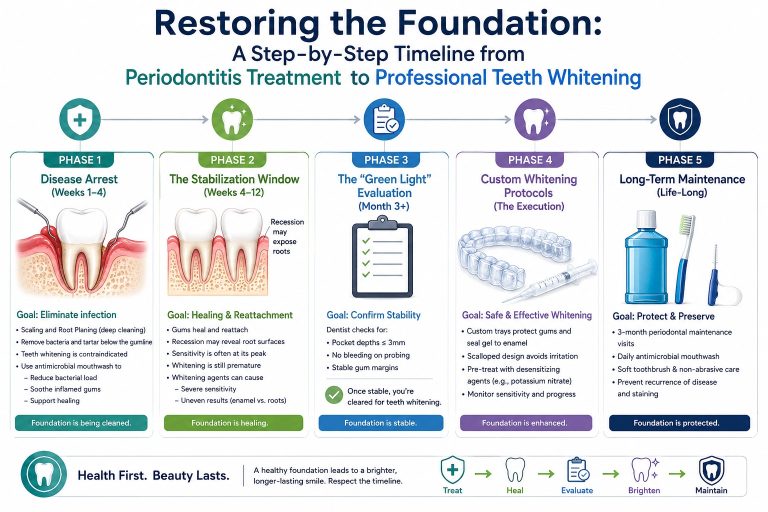
In the modern pursuit of a “Hollywood smile,” teeth whitening has become a ubiquitous goal. however, a bright smile is only as sustainable as the health of the tissues supporting it. For patients diagnosed with periodontitis, the journey to aesthetic enhancement is not a sprint, but a carefully sequenced medical progression.

Periodontitis is a chronic inflammatory disease that destroys the bone and gum tissue surrounding the teeth. Attempting to whiten teeth while this disease is active is akin to painting a house while the foundation is crumbling. To achieve a result that is both beautiful and safe, patients must follow a clinical timeline that prioritizes biological stability over cosmetic speed.

Phase 1: Disease Arrest (Weeks 1–4)

The first and most critical step in the timeline is the elimination of active infection. Periodontitis creates deep “pockets” between the tooth and the gum, where bacteria thrive in an oxygen-free environment.

The Clinical Intervention

Treatment typically begins with Scaling and Root Planing (SRP). This “deep cleaning” removes the tartar and bacterial toxins from beneath the gum line. During this phase, teeth whitening is strictly contraindicated. The gum tissues are often inflamed, ulcerated, and bleeding; applying acidic whitening peroxides to these open wounds would cause extreme pain and potential chemical burns to the delicate connective tissues.

The Role of Antimicrobial Mouthwash

During this initial healing phase, a therapeutic mouthwash is an essential tool. An alcohol-free, antimicrobial rinse helps to:

  • Reduces the bacterial load in the newly cleaned periodontal pockets.
  • Soothes inflamed gingiva, allowing the “red and puffy” appearance to subside.
  • Prepares the oral environment for the next phase of healing by preventing rapid bacterial re-colonization.

Phase 2: The Stabilization Window (Weeks 4–12)

Once the initial scaling is complete, the mouth enters a period of profound transition. This is often the most frustrating part of the timeline for patients eager for teeth whitening, but it is biologically the most important.

Tissue Reattachment and Recession

As the inflammation from periodontitis leaves the body, the gums begin to “shrink” or tighten back around the teeth. This is a sign of health, but it often reveals the true extent of the damage.

  • Root Exposure: Gums that were once swollen and covering the tooth may recede, exposing the root surface (cementum).
  • Sensitivity Peak: Exposed roots contain dentinal tubules that lead to the nerve. This is the period where patients often experience the highest levels of sensitivity.

Whitening during this window is still premature. If whitening gel touches these newly exposed roots, the resulting “zingers” (sharp nerve pains) can be debilitating. Furthermore, whitening agents do not change the color of the roots, only the enamel, which could lead to an unattractive, mismatched two-tone appearance.

Phase 3: The “Green Light” Evaluation (Month 3+)

At the three-month mark, a dentist will perform a periodontal maintenance exam. They are looking for “stability,” which is defined by:

  1. Pocket Depths: Depths should be reduced to a manageable level (typically 3mm or less).
  2. Lack of Bleeding: Gums should no longer bleed when probed or brushed.
  3. Stable Gingival Margins: The gum line has stopped moving, ensuring that a whitening tray or strip will sit consistently on the teeth.

Once the dentist confirms that the periodontitis is in remission, the conversation can finally shift to teeth whitening.

Phase 4: Custom Whitening Protocols (The Execution)

For a post-periodontal patient, a “one-size-fits-all” whitening kit is rarely the best choice. Because the history of gum disease leaves the teeth more vulnerable, the whitening process must be highly controlled.

Why Custom Trays Matter

Professional custom-fitted trays are designed to seal the whitening gel onto the enamel while keeping it away from the sensitive, recessed gum line. This “scalloped” design is vital for patients with a history of periodontitis to prevent chemical irritation of the healed tissues.

Integrating Desensitizing Agents

Even with healthy gums, the previous bone loss from periodontitis often leaves teeth more reactive. A common clinical strategy is to “pre-treat” the teeth with a desensitizing mouthwash or gel containing potassium nitrate for two weeks before the whitening begins. This “calms” the dental nerves, making the cosmetic process much more comfortable.

Phase 5: Long-Term Maintenance (Life-Long)

The final stage of the timeline is the most enduring. Teeth whitening results are temporary, but periodontitis is a chronic condition that requires lifelong vigilance.

To protect both the aesthetic investment and the biological foundation, a strict maintenance routine is required:

  • Three-Month Cleanings: Standard six-month cleanings are often not enough for periodontal patients; more frequent visits ensure the infection does not return.
  • Daily Chemical Defense: Continued use of an antimicrobial mouthwash is the best way to prevent the plaque buildup that causes both staining and gum disease.
  • Non-Abrasive Care: Using a soft toothbrush and non-abrasive whitening products ensures that you don’t wear down the already thinned enamel or damage the fragile gum attachments.

Conclusion: Respecting the Biological Clock

The desire for a whiter smile is understandable, but for the patient with periodontitis, health must always precede beauty. By respecting the 3-to-4-month timeline from deep cleaning to stabilization, you ensure that your teeth whitening procedure is a success rather than a source of pain.

A truly beautiful smile is one where the teeth are bright, but more importantly, where they are firmly rooted in healthy, infection-free bone and tissue. Restoring the foundation first is the only way to ensure that your new, whiter smile lasts a lifetime.

Tooth decay is one of the most common dental concerns, and in many cases, cavities can be treated with a simple filling. However, when a cavity becomes larger or affects a significant portion of the tooth, the decision between a filling and a crown becomes more important.

Both restorations are designed to repair damaged teeth and restore normal function, but they work differently and are recommended for different levels of tooth damage. Understanding the differences between crowns and fillings can help patients better understand their treatment options and why a dentist may recommend one over the other.

How Dental Fillings Work

Dental fillings are commonly used to restore teeth affected by small to moderate cavities.

During treatment, the decayed portion of the tooth is removed and replaced with a restorative material, often a tooth-coloured composite resin. The goal is to rebuild the missing area while preserving as much healthy tooth structure as possible.

Because fillings are conservative restorations, they are often preferred when enough natural tooth remains strong and stable after the decay is removed.

What Makes a Crown Different?

A dental crown covers the entire visible portion of a tooth rather than only the damaged area.

Crowns are typically recommended when a tooth has extensive decay, fractures, or weakened enamel that may not be adequately supported by a filling alone. By surrounding the tooth, the crown helps distribute biting pressure more evenly and protects the remaining structure from further damage.

Crowns are custom-made to match the shape and appearance of the natural tooth and may be fabricated from porcelain, ceramic, zirconia, or other durable materials.

The Size of the Cavity Matters

One of the main factors influencing treatment choice is the amount of healthy tooth structure remaining.

Small cavities often respond well to fillings because the surrounding tooth remains strong enough to support normal chewing forces. However, as cavities grow larger, the remaining tooth walls may become thinner and more vulnerable to cracking.

In these situations, placing a large filling may not provide enough reinforcement for long-term stability. A crown may be recommended instead because it provides greater structural protection.

This is especially common for molars, which absorb substantial pressure during chewing.

Durability and Longevity

Both crowns and fillings can last many years with proper care, but their durability differs depending on the extent of damage and bite pressure.

Large fillings may eventually wear down, crack, or loosen if the surrounding tooth structure is weak. Crowns generally offer more comprehensive protection for heavily restored teeth because they cover the full tooth surface.

Factors affecting restoration longevity include:

  • Oral hygiene habits
  • Teeth grinding
  • Bite alignment
  • Diet
  • Regular dental checkups
  • Material selection

No restoration lasts forever, but maintaining good oral care habits can significantly extend the lifespan of both crowns and fillings.

Treatment Process and Time Commitment

Fillings are usually completed during a single dental appointment and require minimal tooth preparation.

Crowns typically involve a more detailed process. The tooth must first be reshaped so the crown fits securely, and impressions or digital scans are taken to create the custom restoration. In some cases, patients wear a temporary crown until the final one is ready.

Although crowns generally involve more time and preparation, they may provide better long-term protection for teeth with extensive damage.

Patients exploring restorative options for weakened teeth often review dental crown in Cambridge to better understand when full-coverage restorations may be appropriate.

Cost Considerations

Fillings are generally less expensive upfront because they involve less material and laboratory work.

Crowns typically cost more due to the customized fabrication process and the additional steps involved in treatment. However, treatment recommendations are usually based on preserving the integrity of the tooth rather than short-term cost alone.

In some cases, selecting a restoration that offers stronger long-term support may help reduce the risk of future fractures or additional procedures.

Why Delaying Treatment Can Be Risky

Large cavities tend to worsen over time if left untreated. As decay progresses deeper into the tooth, patients may become more vulnerable to:

  • Tooth fractures
  • Severe pain or sensitivity
  • Infection
  • Root canal treatment
  • Tooth loss

Early intervention may help preserve more of the natural tooth and expand available treatment options.

FAQs

How do dentists decide between a filling and a crown?

The decision depends largely on how much healthy tooth structure remains after decay removal and whether the tooth can withstand normal chewing forces safely.

Can a filling be too large for a tooth?

Yes. Very large fillings may weaken the remaining tooth structure and increase the risk of fractures over time.

Are crowns more durable than fillings?

Crowns generally provide more structural protection because they cover the entire tooth rather than only the damaged portion.

Does getting a crown hurt?

Local anesthesia is typically used during crown preparation to keep patients comfortable throughout the procedure.

Can an old filling eventually require a crown?

Yes. Teeth with repeated decay or multiple large fillings may eventually require crowns if the tooth becomes weakened.

Patients with large cavities or weakened teeth should consider scheduling a professional dental evaluation at Cambridge Centre Dental Care to determine whether a filling or crown may offer the most appropriate long-term protection and function.

Understanding modern whitening treatments and how dentists protect patients with tooth sensitivity.

A bright, confident smile is something many people desire, and professional teeth whitening has become one of the most popular cosmetic dental treatments available today. However, individuals with sensitive teeth often hesitate to pursue whitening treatments because they worry about discomfort or potential damage to their enamel.

The good news is that modern dental technology has made professional whitening far safer and more comfortable than many people realize. When performed under the supervision of experienced dental professionals, whitening treatments can be tailored to protect sensitive teeth while still delivering noticeable results.

At All About Smile Dental Group, which serves patients from locations in Chino, Encino, and Rancho Cucamonga, dentists carefully evaluate each patient’s oral health before recommending whitening treatments. This personalized approach ensures that even patients with sensitivity can safely achieve a brighter smile.

Why Teeth Become Sensitive

To understand how whitening can affect sensitive teeth, it helps to first understand what causes sensitivity in the first place.

Tooth sensitivity occurs when the protective enamel layer becomes thinner or when the gums recede, exposing the dentin beneath the enamel. Dentin contains microscopic tubules that connect directly to the tooth’s nerve. When these tubules are exposed, external stimuli such as hot, cold, sweet, or acidic foods can trigger discomfort.

Common causes of tooth sensitivity include:

  • Enamel wear from brushing too aggressively
  • Gum recession
  • Tooth grinding
  • Tooth decay or cracked teeth
  • Recent dental procedures

Because whitening agents temporarily open pores in the enamel to remove stains, some patients may experience mild sensitivity during treatment. However, modern whitening systems are designed to minimize this effect.

“Professional whitening treatments are carefully controlled by dental professionals to protect enamel and minimize sensitivity.”

How Professional Whitening Works

Professional teeth whitening uses safe bleaching agents, typically hydrogen peroxide or carbamide peroxide, to break down stains embedded within tooth enamel.

Professional treatments apply carefully measured concentrations under dental supervision, unlike over-the-counter products. This allows dentists to maximize results while minimizing potential side effects.

Professional whitening treatments generally fall into two main categories:

In-Office Whitening

This method provides the fastest results. A dentist applies a protective barrier to the gums and then places a whitening gel on the teeth. Special lights or lasers may be used to activate the gel and accelerate stain removal.

Many patients notice dramatic improvements in just one visit.

Custom Take-Home Whitening Kits

Dentists can also create custom trays designed specifically for a patient’s teeth. These trays hold whitening gel evenly across the tooth surfaces while reducing contact with sensitive areas.

With this option, patients can gradually whiten their teeth at home under the supervision of a professional.

For patients with sensitive teeth, dentists may recommend a slower approach using lower-strength whitening agents to reduce discomfort.

Special Whitening Options for Sensitive Teeth

Patients with tooth sensitivity are not automatically excluded from whitening treatments. In fact, dentists have several strategies that help reduce sensitivity during the whitening process.

One of the most effective approaches involves using desensitizing agents before or after whitening treatments. These agents often contain ingredients like potassium nitrate or fluoride, which help calm nerve responses and strengthen enamel.

Dentists may also recommend:

  • Lower-concentration whitening gels
  • Shorter whitening sessions
  • Gradual whitening over multiple appointments
  • Special toothpaste formulated for sensitivity

These techniques allow patients to achieve noticeable whitening results while minimizing irritation.

“A customized whitening plan allows patients with sensitive teeth to brighten their smiles comfortably and safely.”

The Importance of Professional Supervision

One of the biggest reasons professional whitening is safer than over-the-counter alternatives is dentist supervision.

Before suggesting whitening treatment, dentists do a full exam to make sure the teeth and gums are healthy enough for the procedure. Before whitening begins, dentists must address issues such as cavities, gum disease, or worn enamel.

Dentists also monitor the treatment process and can immediately adjust techniques if a patient experiences discomfort.

Over-the-counter whitening products often lack this level of oversight, which increases the risk of sensitivity or uneven whitening.

Professional care helps ensure:

  • Safe whitening agent concentrations
  • Proper protection of gums and soft tissues
  • Even whitening results
  • Reduced risk of enamel damage

Maintaining Your Whitening Results

Once whitening treatment is complete, maintaining results becomes an important part of long-term smile care.

Several lifestyle habits can help preserve a brighter smile while minimizing sensitivity.

Patients are often advised to limit foods and beverages that commonly stain teeth, including coffee, red wine, tea, and dark sodas. Smoking can also contribute to rapid staining.

Good oral hygiene habits are equally important. Brushing twice daily with a soft-bristled toothbrush, flossing regularly, and using dentist-approved toothpaste can help maintain results.

Regular dental cleanings also play a key role in preventing surface stains from building up again.

For patients who experience occasional sensitivity, dentists may recommend using sensitive toothpaste or fluoride treatments.

When to Talk to Your Dentist

If you have sensitive teeth and are considering whitening, the best first step is to consult a dental professional.

A dentist can evaluate your enamel health, determine the cause of your sensitivity, and recommend the safest whitening approach for your specific situation.

At All About Smile Dental Group, patients receive personalized cosmetic dentistry solutions designed to protect oral health while enhancing their smiles. With locations in Chino, Encino, and Rancho Cucamonga, the practice offers modern whitening treatments tailored to patients with varying sensitivity levels.

If you are considering teeth whitening but worry about tooth sensitivity, schedule a consultation with All About Smile Dental Group. Their experienced dental team can help you achieve a brighter smile safely and comfortably.