
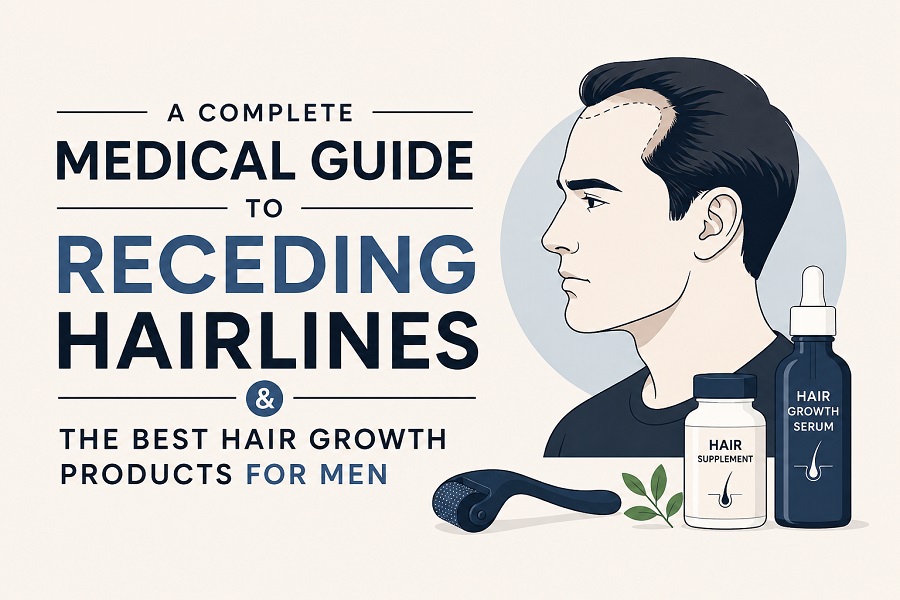
A receding hairline is often the very first sign of male pattern baldness (androgenetic alopecia). This specific form of hair loss typically begins at the temples, creating a distinctive “M” shape, before thinning progresses across the crown of the head.
While a changing hairline can be frustrating, understanding the biological mechanism behind it allows you to choose targeted, clinically backed products rather than relying on marketing gimmicks.
What Causes a Receding Hairline?
To treat a receding hairline effectively, you must understand why it happens. This type of hair loss is primarily genetic and hormonal. It is driven by a sensitivity to Dihydrotestosterone (DHT), a hormone derived from testosterone.
When DHT binds to receptors in the hair follicles along your hairline, it triggers a process called miniaturization.
- The follicle’s growth phase (anagen) becomes shorter.
- The hair grows back finer, thinner, and shorter with each cycle.
- Eventually, the follicle shrinks so much that it stops producing hair entirely.
Because the hair follicles at the temples and crown have the highest concentration of DHT receptors, they are the first to recede.
The Best Hair Growth Product Categories for Men
When looking for the best hair growth product for men, you must look past basic vitamin gummies and cosmetic shampoos. Because a receding hairline is caused by a medical, hormonal process, it requires medical-grade active ingredients to reverse.
The gold standard of hair preservation relies on two FDA-approved treatments that attack the problem from two different angles: blocking DHT and stimulating blood flow.
1. The Best Over-the-Counter Product: Topical Minoxidil (5%)
- How it works: Minoxidil is a powerful vasodilator. When applied directly to the hairline, it widens the blood vessels surrounding your hair follicles. This increases the delivery of oxygen, blood, and vital nutrients, forcing dormant or miniaturized follicles back into an active growth phase.
- What to buy: Look for 5% Minoxidil Foam (available from brands like Rogaine, Hims, or generic Kirkland). The foam version is widely preferred over the liquid solution because it dries faster and does not contain propylene glycol, an ingredient known to cause scalp irritation, redness, and flaking.
2. The Best Prescription Product: Finasteride (1mg)
- How it works: While Minoxidil stimulates growth, Finasteride addresses the root cause of the receding hairline. Taken as a daily oral tablet or a compounded topical spray, Finasteride blocks the 5-alpha reductase enzyme, which is responsible for converting testosterone into DHT. By lowering scalp DHT levels by up to 70%, it halts follicle shrinkage.
- What to buy: This requires a prescription from a doctor or a reputable telehealth platform (such as Keeps, Roman, or Hims).
The Modern All-in-One: Topical Finasteride & Minoxidil Sprays
In recent years, the hair restoration industry has shifted toward combination topical sprays. These prescription-only formulas blend both Minoxidil and Finasteride into a single daily spray applied directly to the hairline.
This approach is highly effective for a receding hairline because it delivers the DHT-blocking power exactly where it is needed most, significantly reducing the risk of systemic side effects associated with oral medication.
Comparing Your Best Options
| Product Type | Primary Ingredient | How It Helps | Best For | Availability |
| Topical Foam | Minoxidil 5% | Boosts blood flow & widens follicles | Regrowing hair at the temples | Over-the-counter |
| Oral Tablet | Finasteride 1mg | Blocks DHT hormone production | Halting further recession | Prescription required |
| Combined Spray | Minoxidil + Finasteride | Stimulates growth and blocks DHT | All-in-one hairline targeted treatment | Prescription required |
Clinical Realities to Keep in Mind
- The Timeline: Hair growth cycles move slowly. You must use these products consistently for 3 to 6 months just to see the hair loss stabilize, and up to 12 months to see visible regrowth at the hairline.
- The Commitment: Hair loss treatments are not temporary cures. If you stop using the products, DHT levels will rise again, the follicles will begin shrinking, and any hair you saved or regrown will gradually shed.
Next Steps
To successfully treat a receding hairline, consistency is your greatest asset. If you are just beginning to notice thinning at your temples, starting with an over-the-counter 5% minoxidil foam is a safe and effective first step. For more aggressive recession, consulting a dermatologist about a prescription DHT-blocker will give you the highest chance of long-term success.

Comments are closed.